Best places to live in London 2026
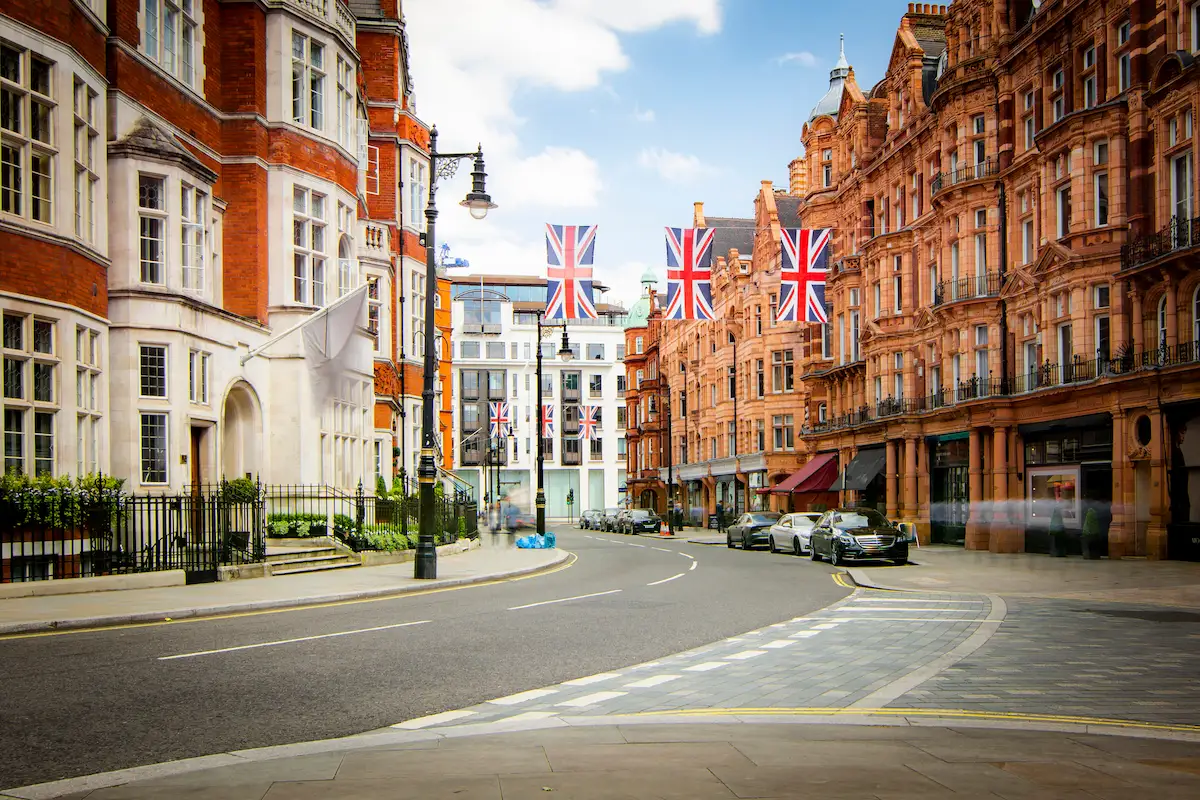


Last updated: September 2026 | Written by Sascha Pendigrast, Head of Operations at London Relocation — with over a decade spent matching people to the right London neighbourhood.
“Where should I actually live in London?” is the single most common question we hear — and the answer has shifted in 2026. For years, “best” was treated as a synonym for “most expensive” or “most central.” That’s no longer true. Rents are still rising across London, but they’ve stalled in prime central boroughs such as Westminster and Camden while greener outer areas like Richmond keep climbing — so the smartest question now is: where do you get the most real, everyday quality of life for your money?
This guide answers that in layers: a quick overview, our ranked top 15 with a profile of every area, a clear-eyed look at London’s classic favourites — Shoreditch, Camden, Hampstead, Marylebone, Notting Hill, Chelsea, Battersea, Fulham and more — and who they really suit, then what rent actually costs in each part of the city, our picks by lifestyle and by part of London, and the areas we’re watching next.
The short answer
There’s no single “best” area — it depends on your life stage and budget. But if we had to summarise 2026 in one line each:
- Best all-rounder: Richmond — safest, greenest, top schools (but pricey, and Heathrow flight noise is real).
- Best value + community: Walthamstow — culture, green space and a real neighbourhood feel for far less.
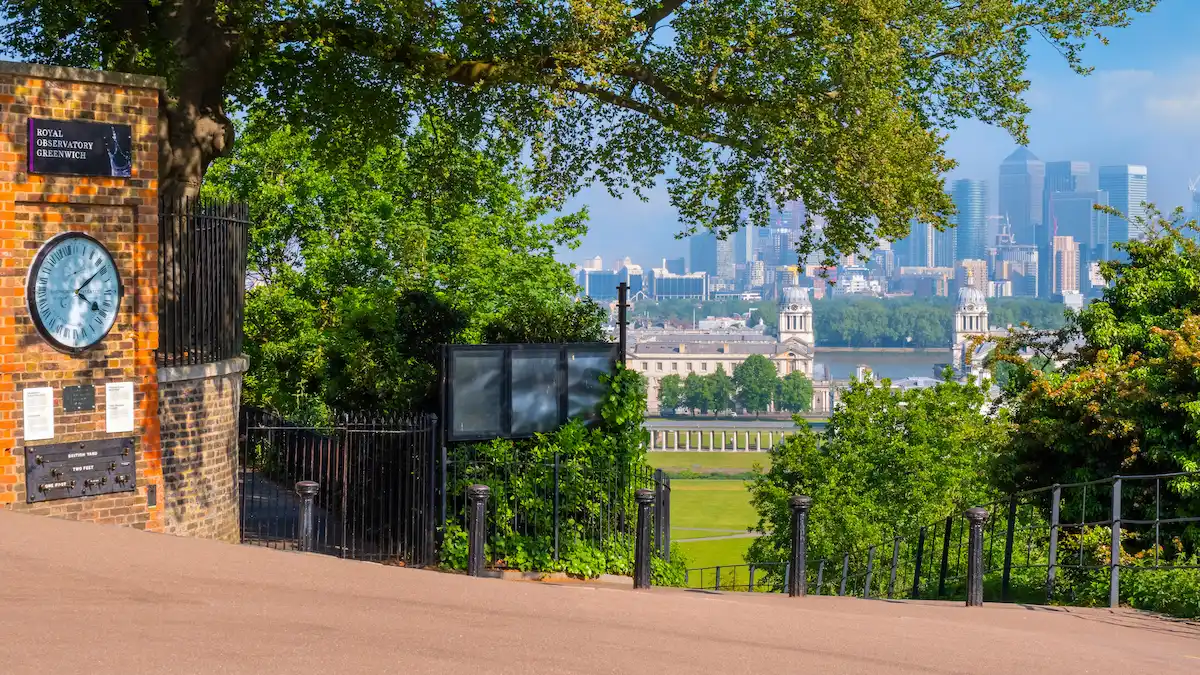
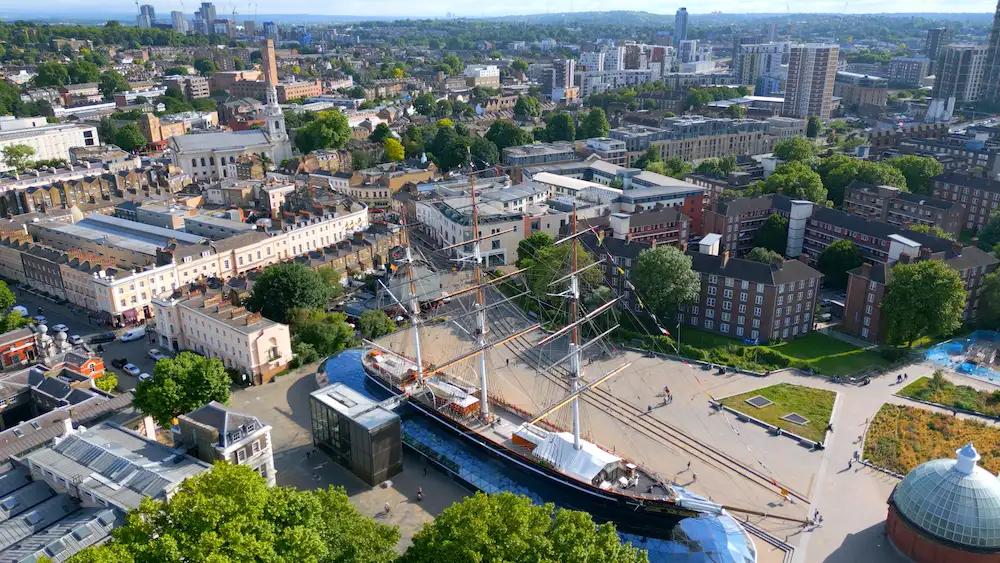
- Best in South East: Greenwich & Blackheath — history, parks and strong transport.
- Best in West: Ealing — the value winner since the Elizabeth line arrived.
- Best classic central choice: Marylebone — a real village feel in Zone 1 (at a Zone 1 price).
- Best for social life: Clapham — or Shoreditch if you want it edgier.
- Best future bet: Canada Water — huge upside by 2028–2030, but still a building site today.
Our #1 is in good company: The Sunday Times named Richmond the best place to live in London in its Best Places to Live 2026 guide — and our #2, Walthamstow, was its London winner the year before.
In this guide
How We Judge “Best” in 2026
Plenty of “best places to live” lists just rank the most famous postcodes. We don’t think that’s useful if you’re actually moving. Our ranking weighs eight factors that reflect how good a place is to live in day to day — not just how prestigious the address sounds:
- Housing market & value — are you getting genuine quality for the price?
- Transport & commute — fast central access plus multiple reliable rail options.
- Schools — especially state primary and secondary performance.
- Safety — borough-level crime rates, which vary enormously.
- Green space & leisure — usable parks, heaths and waterside, not just a square of grass.
- Amenities & culture — high streets, food, independent shops, community life.
- Value for money — the everyday-quality-per-pound question.
- Future pipeline — delivered or near-delivered improvements, not speculative promises.
Insider note from our team
The biggest mistake we see relocating clients make is anchoring on a famous name — Chelsea, Notting Hill, Hampstead — before they’ve worked out what their actual daily life will look like. Almost every week, someone arrives set on a prestige postcode and leaves a viewing trip having fallen for somewhere greener, calmer and 30% cheaper a few zones out. Start from your life, not the map!
What’s Changed in London in 2026
If your mental picture of the London market is from a few years ago, a few things have shifted that genuinely affect where the smart money lives now:
- House prices have cooled — rents haven’t. The average London house price was around £569,000 in July 2026, down 3.3% year-on-year, while the average private rent reached £2,332 a month in August 2026, up 3.5% (ONS, September 2026). Prices are no longer booming across the board, which makes value areas more attractive than ever.
- The central premium has stalled. In the year to August 2026, rents in Westminster slipped 0.6% and Camden rose just 1.0%, while greener outer boroughs such as Richmond upon Thames (+4.4%) and Ealing (+3.0%) kept climbing (ONS). “Central” no longer automatically means “best.”
- Delivered transport has reshaped the map. The Elizabeth line has transformed west and east London commutes, and the Silvertown Tunnel opened in April 2025, improving south-east cross-river links. These are real, working improvements — not promises.
- Some “future hotspots” are further off than people think. The HS2 hub at Old Oak Common, for example, won’t see first trains until the late 2030s — so we’d be cautious about buying into areas whose whole case rests on infrastructure that’s still a decade away.
For the full data picture, see our London rental market outlook and our cost of living in London guide.
The 15 Best Places to Live in London (2026)
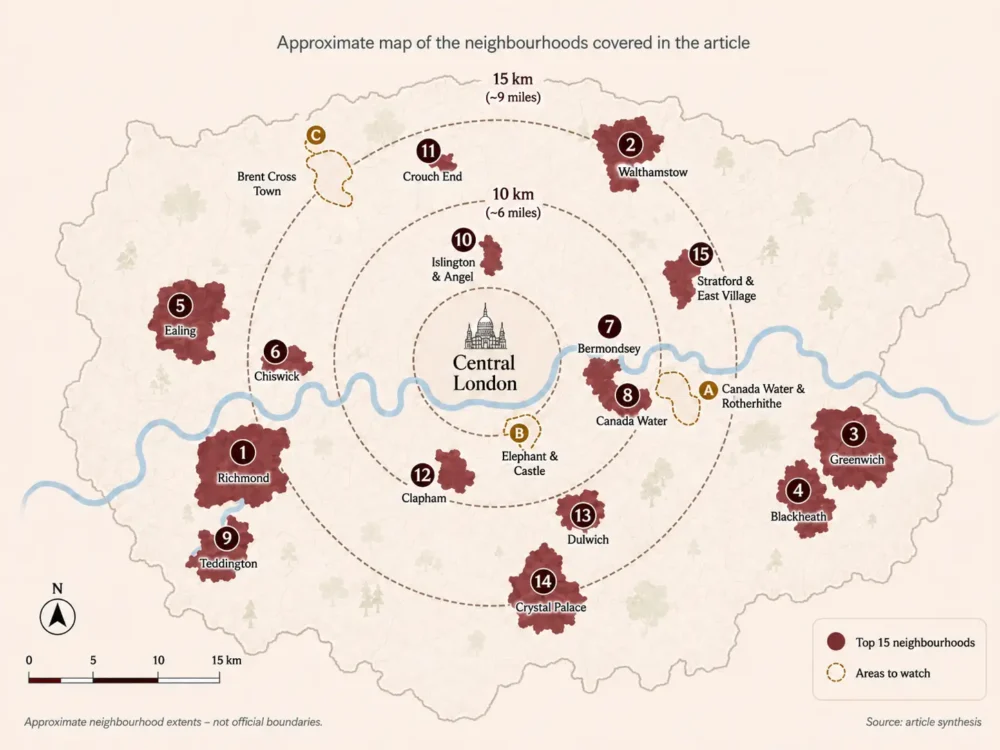
Our ranking is weighted toward broad liveability rather than prestige or pure investment. Three areas stand clearly above the rest in 2026 — here’s our top three, followed by the full top 15 and a profile of each area.
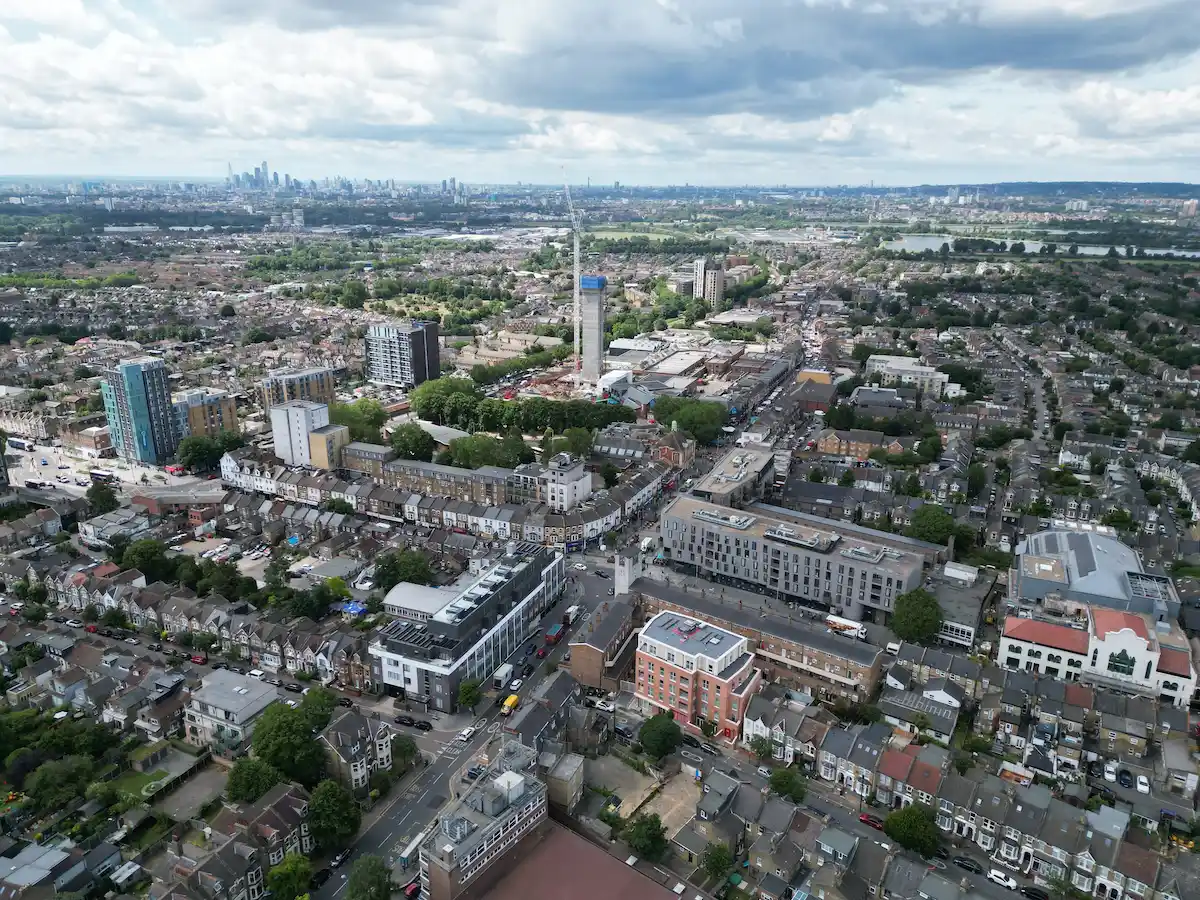
The Full Top 15
Here’s the complete ranking, including the three areas above. Scroll the table sideways on mobile to see every column — and every area is profiled in more detail below.
Ranking weighted toward broad liveability: housing/value 20%, transport 15%, schools 15%, safety 15%, green space 10%, amenities/culture 10%, value for money 10%, future pipeline 5%. A great area for a family may rank differently for a 25-year-old — see the lifestyle picks below.
The Top 15, Area by Area
We’ve already covered Richmond, Walthamstow and Greenwich above. Here’s what each of the rest of our top 15 is really like — what it does best, the catch, and how it connects to the rest of London. Rents are borough averages from the ONS (August 2026); the rent comparison further down puts them in context.
4. Blackheath
Blackheath is the closest thing South East London has to a proper village: independent shops, cafés and pubs clustered around the station, handsome Georgian and Victorian houses, and a huge open heath that runs straight into Greenwich Park. It straddles the Lewisham and Greenwich borough boundary and has no big shopping centre — just a village high street that locals use every day, which is a large part of its calm, settled feel. Families come for the space and the choice of primary schools; downsizers come for the walkable village. More in our Blackheath area guide.
The catch: Homes are expensive for their size, and there is no Tube — you rely on Southeastern trains, buses or the DLR at nearby Lewisham.
At a glance: Zone 3 · Southeastern trains to London Bridge in around 15 minutes · Borough average rent £1,829 (Lewisham) to £1,995 (Greenwich).
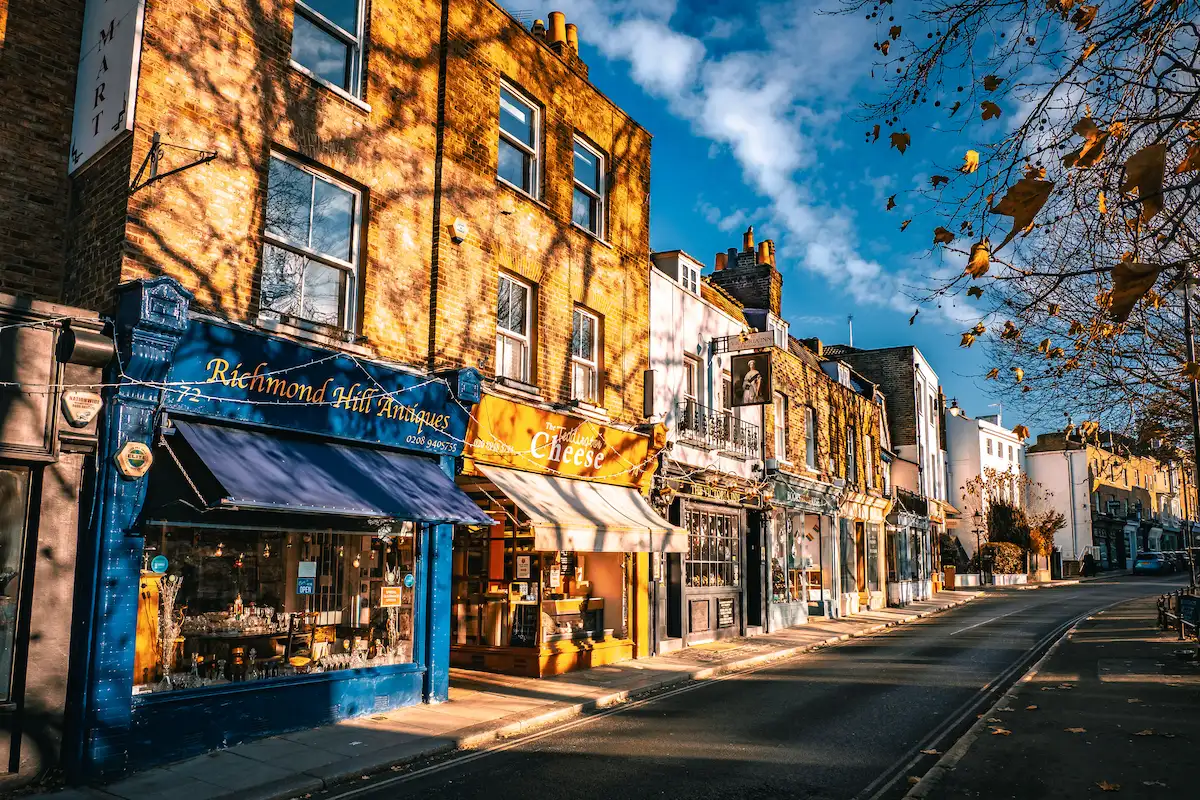
5. Ealing
Ealing was nicknamed the “Queen of the Suburbs” more than a century ago, and the Elizabeth line has made it West London’s value winner: Ealing Broadway now reaches Bond Street in around 15 minutes, on top of the Central and District lines. You get large Victorian and Edwardian family houses, Walpole Park and Ealing Common, a busy town centre and a strong mix of state and independent schools. It’s a big area, so be specific — Ealing Broadway and South Ealing feel different from West Ealing or Northfields. Neighbouring Acton, also on the Elizabeth line, is the cheaper option next door. More in our Ealing area guide.
The catch: It feels more suburban than Chiswick, and the roads around the Broadway get congested.
At a glance: Zone 3 · Elizabeth, Central and District lines · Borough average rent £2,109.
6. Chiswick
Chiswick is West London at its most polished: a long, lively high street full of independent restaurants, riverside pubs along Strand-on-the-Green, the grounds of Chiswick House and Gardens, and some of the best-kept Victorian streets in the city. It’s a favourite with senior professionals and relocating families who want a village atmosphere with plenty going on. Transport is mainly the District line (Turnham Green, Chiswick Park, Stamford Brook) plus South Western Railway trains from Chiswick station to Waterloo. More in our Chiswick area guide.
The catch: You pay a clear premium over Ealing for the high street and the name, and the A4 and A316 bring heavy traffic along the area’s edges.
At a glance: Zones 2–3 · District line, plus rail from Chiswick to Waterloo · Borough average rent £1,952 (Hounslow) — Chiswick itself sits well above the borough average.
7. Bermondsey
Bermondsey is the best city-fringe choice on our list: one Jubilee line stop from London Bridge, a short walk from Tower Bridge, and one of London’s best food scenes, from the restaurants of Bermondsey Street to Maltby Street Market under the railway arches. Converted warehouses and mansion blocks sit alongside newer developments, and it suits people who want to walk or cycle to work in the City, the South Bank or Canary Wharf. The Sunday Times agrees: its Best Places to Live 2026 guide included the Bermondsey-to-Waterloo stretch of Southwark among London’s seven best places to live, calling it “a hotspot for culture”. More in our Bermondsey and Shad Thames area guides.
The catch: Less green space than outer areas, and Southwark’s borough-wide crime figures are higher — always check the specific street.
At a glance: Zone 2 · Jubilee line, with London Bridge one stop away · Borough average rent £2,474 (Southwark).
8. Canada Water
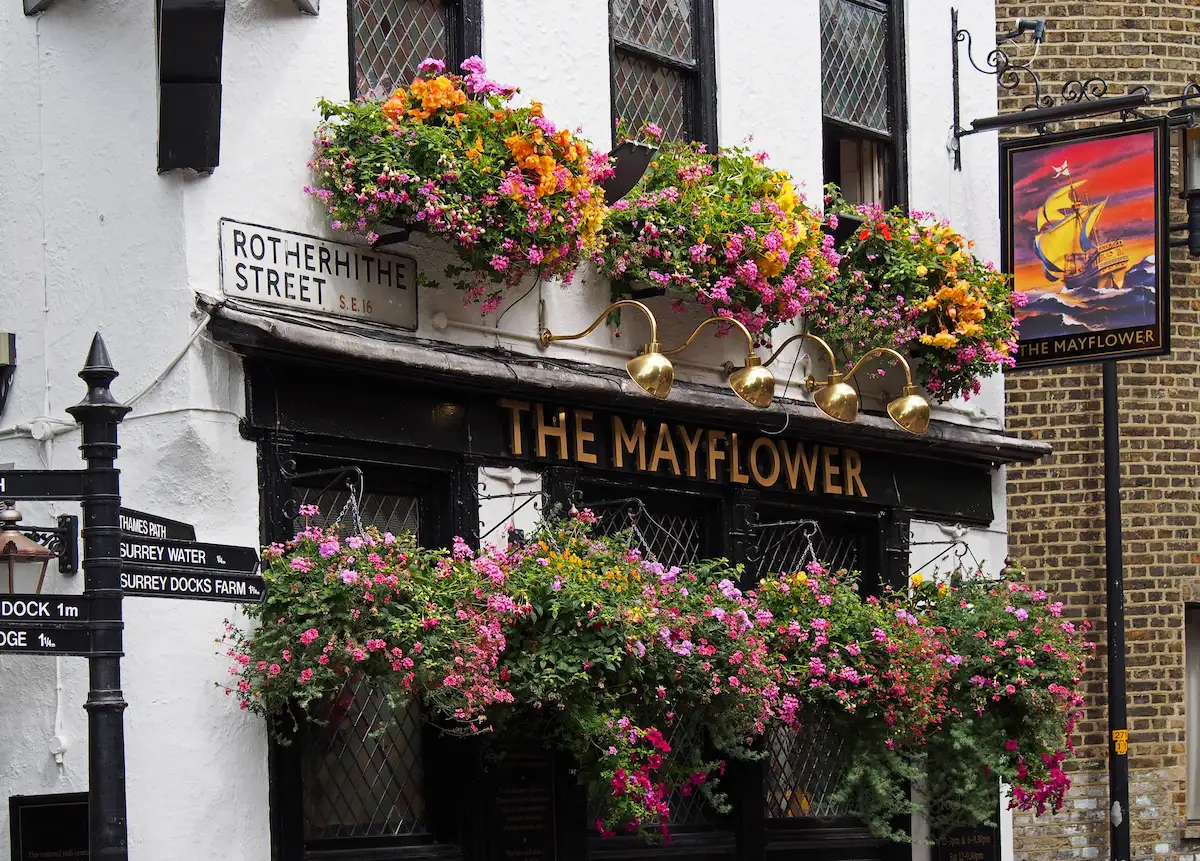
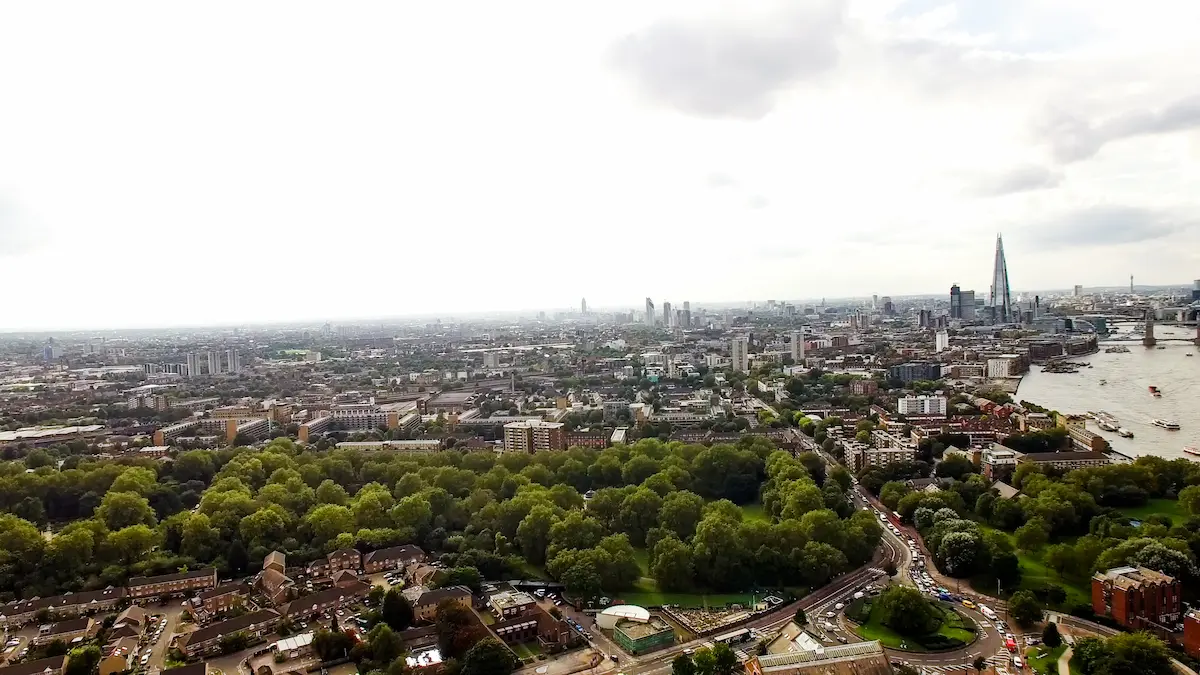
Canada Water is our long-term pick. The transport is already excellent — the Jubilee line to Canary Wharf and London Bridge, and the London Overground (Windrush line) north to Shoreditch and Dalston — and there’s water on every side, plus Southwark Park and Russia Dock Woodland. What it doesn’t have yet is a finished town centre: the regeneration is being delivered in phases, so you’re moving into a place that will look very different by 2030. For a young professional who wants modern housing and a short commute, or a buyer thinking long term, that’s the appeal. Next door, Rotherhithe’s riverside streets add history and pubs such as The Mayflower. See Areas to Watch below for the full picture.
The catch: Construction will be part of daily life for years, and parts of the area still feel impersonal.
At a glance: Zone 2 · Jubilee line and London Overground · Borough average rent £2,474 (Southwark).
9. Teddington
Teddington gives you most of what makes Richmond so appealing — it’s in the same borough, with the same strong schools and the same calm — usually for a little less. The high street is compact and friendly, Bushy Park is on the doorstep, and Teddington Lock marks the point where the Thames stops being tidal. It suits families, retirees and hybrid workers who don’t need to be in central London every day. More in our Teddington area guide, or look at nearby Twickenham and Kingston.
The catch: The commute is longer and there’s no Tube — trains to Waterloo take around 35–40 minutes.
At a glance: Zone 6 · South Western Railway to Waterloo · Borough average rent £2,333 (Richmond upon Thames).
10. Islington & Angel
Islington is for people who want to live in London rather than beside it. Upper Street’s restaurants, the Almeida Theatre and Sadler’s Wells, the antique shops of Camden Passage and the Georgian squares of Canonbury and Barnsbury are all within walking distance, and Angel is three stops from Bank on the Northern line. Highbury, just north, adds Highbury Fields and the Victoria line. It’s a natural fit for young professionals and car-free households who value time over space. More in our Islington and Angel area guides.
The catch: It has the highest borough rent of any area in our top 15, and green space is limited.
At a glance: Zones 1–2 · Northern and Victoria lines, London Overground · Borough average rent £2,868 (Islington).
11. Crouch End
Crouch End is North London’s strongest village-feel community: a clock tower at its heart, an independent high street, good cafés and a creative, family-heavy crowd, with Alexandra Palace and the Parkland Walk close by. The Sunday Times put it among London’s seven best places to live for 2026, noting that it “has all the charms of a quintessential English market town – it just happens to be in Zone 3”. Its one real weakness is transport. More in our Crouch End area guide, or look at neighbouring Muswell Hill and Highgate.
The catch: There’s no Tube station — most people take a bus to Finsbury Park or Highgate, or use the rail stations at Hornsey and Crouch Hill.
At a glance: Zone 3 · Buses, Great Northern trains from Hornsey, London Overground from Crouch Hill · Borough average rent £2,219 (Haringey).
12. Clapham
Clapham is still London’s social capital for people in their twenties and thirties: Clapham Common at its centre, busy bars and restaurants along Clapham High Street and Northcote Road, three Northern line stations, and Clapham Junction — one of Britain’s busiest railway junctions — for fast trains to Victoria and Waterloo in around 10 minutes. It works best for sharers, young couples and new arrivals who want a ready-made social life. If Clapham feels too busy or too pricey, Balham, a couple of stops south on the Northern line, offers a similar lifestyle with a calmer, more family-friendly feel. More in our Clapham area guide.
The catch: Value has slipped as prices rose, and the weekend crowd isn’t for everyone.
At a glance: Zone 2 · Northern line, London Overground, and rail from Clapham Junction · Borough average rent £2,525 (Lambeth; the Clapham Junction side is in Wandsworth, £2,632).
13. Dulwich
Dulwich is one of South London’s most family-focused areas: leafy roads, Dulwich Park, the Dulwich Picture Gallery — the world’s first purpose-built public art gallery — and a cluster of well-known independent schools alongside good state primaries. Dulwich Village keeps a surprisingly rural feel, while East Dulwich, built around the cafés, delis and pubs of Lordship Lane, is livelier and a little more affordable. More in our East Dulwich area guide.
The catch: There’s no Tube anywhere in Dulwich, so you rely on rail and buses, and family homes near the best schools are expensive.
At a glance: Zones 2–3 · Southern trains from North and East Dulwich to London Bridge in around 15 minutes; Southeastern from West Dulwich to Victoria · Borough average rent £2,474 (Southwark).
14. Crystal Palace
Crystal Palace sits high on a ridge where five boroughs meet — Bromley, Croydon, Lambeth, Lewisham and Southwark — which gives it long views across London and a slightly independent, creative character. The “Triangle” of streets at the top of the hill is packed with independent restaurants, vintage shops and bars, and Crystal Palace Park, home to the famous Victorian dinosaur sculptures, is one of South London’s best green spaces. Homes, especially Victorian conversions, tend to cost less than in Dulwich or Clapham, which is why young families and first-time buyers look here.
The catch: Secondary schools are mixed and there’s no Tube, so journey times depend heavily on where you work.
At a glance: Zones 3–4 · London Overground (Windrush line) via Canada Water and Shoreditch; Southern trains to Victoria and London Bridge · Split across five boroughs, so there’s no single borough rent figure.
15. Stratford & East Village
Stratford is the best-connected place on our list: the Central, Jubilee and Elizabeth lines, the DLR, the London Overground and high-speed trains that reach St Pancras in around seven minutes. East Village, the former Olympic athletes’ village, offers modern, mostly purpose-built rental homes set around landscaped parks, and Queen Elizabeth Olympic Park is on the doorstep, along with Westfield Stratford City and the new East Bank cultural quarter. It suits students, early-career professionals and international renters who want everything new and everything connected. More in our Stratford area guide.
The catch: Less small-scale charm than older neighbourhoods, and the busiest areas around the station and shopping centre have higher crime figures.
At a glance: Zones 2–3 · Central, Jubilee and Elizabeth lines, DLR, London Overground and high-speed rail · Borough average rent £1,928 (Newham).
London’s Classic Favourites — and Who They Really Suit
Some of London’s best-known neighbourhoods don’t make our top 15. That isn’t because they’re bad places to live — several are wonderful — but because our ranking weighs value, schools, safety and green space as heavily as prestige, and on that basis they score lower for the typical mover. They’re still the right answer for plenty of people. Here’s who each one really suits, and where to look if you love the idea but not the price.
Shoreditch, Hoxton & Hackney
East London’s creative engine room: street art, start-ups, Boxpark, the Sunday flower market on Columbia Road, and some of the city’s best bars and restaurants. Hackney proper adds London Fields, Broadway Market and Victoria Park, with a more residential feel. Shoreditch sits right on the edge of the City, so many residents walk to work; everyone else uses the London Overground, the Northern line at Old Street or the Elizabeth line at Liverpool Street. More in our Shoreditch, Hackney and Spitalfields area guides.
Best for: Young professionals in tech and the creative industries who want nightlife and a walkable commute.
Why it’s not in our top 15: It’s noisy, pricey for the space you get, and short on green space in Shoreditch itself.
Also consider: Walthamstow for the same creative energy at a much lower rent, or Bermondsey for a calmer city-fringe base.
At a glance: Zones 1–2 · London Overground, Northern line, Elizabeth line at Liverpool Street · Borough average rent £2,658 (Hackney).
Camden, Kentish Town & Primrose Hill
Camden is London’s alternative heartland — Camden Market, the Roundhouse, live music most nights of the week and the Regent’s Canal towpath. Just north, Kentish Town is more grown-up, with good pubs, the Forum and easy access to Hampstead Heath. To the west, Primrose Hill is one of London’s most sought-after village enclaves, with its famous view over central London from the top of the hill.
Best for: Creatives, music lovers and young professionals who want character close to the West End (Kentish Town and Primrose Hill also suit families).
Why it’s not in our top 15: Camden Town itself is crowded, touristy and loud, and rents are well above the London average.
Also consider: Kentish Town or Belsize Park for Camden’s access with a calmer feel, or Crouch End for the village version.
At a glance: Zone 2 · Northern line, London Overground · Borough average rent £2,819 (Camden).
Hampstead & Highgate
Hampstead is London’s best-known literary village: Georgian lanes, independent boutiques, Keats House, and the vast open spaces of Hampstead Heath, with its swimming ponds, Kenwood House and one of the best views of the city from Parliament Hill. Highgate, on the other side of the Heath, is quieter, with Highgate Cemetery, Waterlow Park and a strong community feel. More in our Hampstead and Highgate area guides.
Best for: Established families, senior professionals and anyone who wants countryside-scale green space within easy reach of central London.
Why it’s not in our top 15: Some of the highest prices in London and a limited supply of family rentals — you pay heavily for the name.
Also consider: Crouch End or Muswell Hill for a similar feel at a lower cost; Belsize Park for Hampstead’s elegance a little closer in.
At a glance: Zones 2–3 · Northern line, London Overground at Hampstead Heath · Camden and Haringey boroughs, with local rents well above the borough averages.
Marylebone & St John’s Wood
Marylebone is the rare Zone 1 neighbourhood that feels like a village. Marylebone High Street has independent shops, Daunt Books and a Sunday farmers’ market nearby; Regent’s Park is at the top of the street; and you can walk to Oxford Street, the West End or Paddington. Just north, St John’s Wood offers larger homes, Lord’s Cricket Ground and The American School in London, which makes it a long-standing favourite with US families — see our guide to American schools in London. More in our Marylebone area guide.
Best for: Couples, senior professionals and international families who want a central, walkable life.
Why it’s not in our top 15: A central-London price — Westminster rents average more than a third above the London figure — and little private outdoor space.
Also consider: Maida Vale or Little Venice for a quieter central option, or Fitzrovia for the same central convenience.
At a glance: Zones 1–2 · Bakerloo, Jubilee and Circle lines, plus the Elizabeth line at Bond Street · Borough average rent £3,196 (Westminster).
Notting Hill & Holland Park
Notting Hill means pastel townhouses, garden squares, Portobello Road Market and the Notting Hill Carnival every August bank holiday. Holland Park, next door, is quieter and grander, with one of London’s loveliest parks — Kyoto Garden included. Both have a large international community and easy Central line access to the West End and the City. More in our Notting Hill area guide.
Best for: Senior professionals and international families with a generous housing budget.
Why it’s not in our top 15: Kensington and Chelsea has the highest average rent in the UK — £3,690 a month, around 58% above the London average — so family space costs a lot.
Also consider: Shepherd’s Bush or Hammersmith for Central and District line access at lower rents.
At a glance: Zones 1–2 · Central, District and Circle lines · Borough average rent £3,690 (Kensington & Chelsea).
Chelsea & Kensington
London’s classic prestige addresses: the King’s Road and Sloane Square, the museums of South Kensington (the V&A, the Natural History Museum and the Science Museum), Hyde Park and Kensington Gardens, and some of the capital’s grandest garden squares. South Kensington is also home to the Lycée Français Charles de Gaulle, which anchors a large French community. More in our Chelsea, Kensington and Sloane Square area guides.
Best for: High-budget relocators, diplomatic and corporate families, and anyone who wants world-class culture on the doorstep.
Why it’s not in our top 15: The highest rents in the UK mean it can’t compete on value — you’re paying mainly for the address and the location.
Also consider: Fulham or Parsons Green for a similar feel at a lower cost, or Battersea just across the river.
At a glance: Zone 1 · District, Circle and Piccadilly lines · Borough average rent £3,690 (Kensington & Chelsea).
Battersea & Nine Elms
Few parts of London have changed as much in the past decade. The restored Battersea Power Station is now a shopping, dining and office destination with its own Northern line station; Nine Elms is a riverside cluster of new towers and home to the US Embassy; and Battersea Park, with its riverside promenade, boating lake and Peace Pagoda, is one of the best parks in the city. Older Battersea, around Northcote Road and “Between the Commons”, is all Victorian terraces and family life — and Wandsworth has one of the lowest council tax bills in the country. More in our Battersea and Wandsworth area guides.
Best for: Young professionals and couples who want new-build amenities, and families in the Victorian streets near the commons.
Why it’s not in our top 15: New-build rents are high for the space, and parts of Nine Elms still feel unfinished.
Also consider: Clapham or Balham for more established neighbourhoods, or Vauxhall for similar riverside new-builds.
At a glance: Zones 1–2 · Northern line, rail from Battersea Park, Queenstown Road and Clapham Junction · Borough average rent £2,632 (Wandsworth).
Fulham & Parsons Green
Fulham gives you much of Chelsea’s polish for less: tree-lined Victorian terraces, riverside Bishop’s Park and Fulham Palace, busy gastropubs around Parsons Green, and two famous football grounds, Craven Cottage and Stamford Bridge. The Sunday Times included Fulham among London’s seven best places to live for 2026, describing it as “unassuming but reassuringly well heeled”. More in our Fulham and Parsons Green area guides.
Best for: Young professionals moving up the ladder, and families who want a village feel close to central London.
Why it’s not in our top 15: Rents are among the highest outside Zone 1, and the District line gets very crowded at peak times.
Also consider: Putney across the river, or Hammersmith for better transport at similar rents.
At a glance: Zone 2 · District line, London Overground at Imperial Wharf · Borough average rent £2,825 (Hammersmith & Fulham).
Canary Wharf
A business district that has become a residential neighbourhood: high-rise rental buildings with concierges, gyms and pools, a waterside setting, a growing choice of restaurants and green spaces, and some of the best transport in London — the Jubilee line, the DLR and the Elizabeth line, which reaches Bond Street in under 20 minutes. More in our Canary Wharf area guide.
Best for: Finance and tech professionals working on the Wharf or in the City, and newcomers who want a turnkey rental.
Why it’s not in our top 15: It can feel corporate and quiet at weekends, with less of a traditional neighbourhood feel than anywhere else in this guide.
Also consider: Canada Water, one Jubilee line stop away, for a greener and more residential version, or Wapping for warehouse conversions by the river.
At a glance: Zone 2 · Jubilee line, DLR, Elizabeth line · Borough average rent £2,453 (Tower Hamlets).
Brixton & Peckham
South London’s most energetic neighbourhoods. Brixton has the Victoria line (around 15 minutes to Oxford Circus), Brixton Village and Market, a famous live music scene, and Brockwell Park and its lido next door. Peckham has a thriving arts and food scene, rooftop bars, Peckham Rye Park, and London Overground and rail links to the City and London Bridge. Both are diverse, creative and young.
Best for: Young professionals and creatives who want nightlife and culture for less than Clapham or Shoreditch.
Why it’s not in our top 15: Higher crime figures in the busiest parts, and quality varies a lot from street to street.
Also consider: East Dulwich (next door to Peckham) for a calmer version, or Streatham further south for more space.
At a glance: Zone 2 · Victoria line (Brixton); London Overground and rail (Peckham) · Borough average rents £2,525 (Lambeth) and £2,474 (Southwark).
Wimbledon & Putney
Wimbledon is best known for the tennis, but residents value Wimbledon Common, the village on the hill and the busy town centre below it, plus excellent transport: the District line, fast trains to Waterloo in around 15–20 minutes, Thameslink and trams. Putney, closer in, has the river (it’s where the Boat Race starts), Putney Heath and a lively high street, with the District line and trains to Waterloo. More in our Wimbledon and Putney area guides.
Best for: Families who want space, strong schools and green commons; young professionals in Putney.
Why it’s not in our top 15: They come close. Family homes are expensive, and on our value weighting Richmond, Ealing and Teddington edge ahead.
Also consider: Southfields, between the two, for a quieter base, or Tooting for a younger, livelier feel.
At a glance: Zones 2–3 · District line, rail to Waterloo, Thameslink and trams · Borough average rents £2,172 (Merton) and £2,632 (Wandsworth).
The Numbers: What Your Rent Buys Across London
Rent is where the differences between areas become concrete. The table below uses the latest official figures — the ONS Price Index of Private Rents for August 2026 — at borough level, the most detailed level published consistently across London. The spread is enormous: the average rent in Kensington and Chelsea (£3,690 a month, the highest in the UK) is more than double the average in Waltham Forest (£1,763), home to our #2, Walthamstow. And look at our #1: Richmond upon Thames averages £2,333 — almost exactly the London average — for the area we rate as the best all-rounder in the capital.
Average monthly private rents by borough, all property types, from the ONS Price Index of Private Rents (August 2026, published 16 September 2026). Borough figures are proxies — rents within a borough vary a lot by street, property type and size (Chiswick sits well above the Hounslow average, for example), so talk to us about the specific streets you’re considering. For safety, use the neighbourhood crime maps on police.uk to check the exact streets on your shortlist rather than relying on borough rankings.
Insider note from our team
Borough averages — for rents or crime statistics — can be misleading for a specific street. A borough like Southwark includes very busy, late-night, tourist-heavy zones — but Bermondsey Street itself, or a quiet Dulwich Village road in the same borough, feels completely different at street level. When we shortlist properties, we look at ward and street-level data, not just the borough headline. Don’t rule an area out on a single number.
Best Areas by Lifestyle And Life Stage
The “best” area genuinely depends on who’s moving. Here’s how we’d steer different people — because a 26-year-old in their first London job and a family of five with school-age kids should be looking in very different places.
Best for Families
Top picks: Richmond, Greenwich, Blackheath, Ealing, Dulwich, Teddington.
Families should weigh schools, safety and green space above almost everything — and accept that the best family areas usually mean a longer commute in exchange. Richmond and Teddington lead on the school-and-safety combination (with the Heathrow flight-path caveat), while Ealing offers the best value-per-pound in the west. In the south east, Greenwich, Blackheath and Dulwich combine parks, character and good schools. If budget allows, Wimbledon, Hampstead and Fulham are strong family choices too, and Kingston offers good value next to Richmond. For a deeper dive, see our best places to live in London for families, our guide to London’s top secondary schools and our guide for families moving to London.

Best for Young Professionals
Top picks: Walthamstow, Bermondsey, Clapham, Islington, Stratford — plus Shoreditch and Canary Wharf.
If you want energy, nightlife, walkable streets and a fast commute, look at Clapham and Islington for the classic social scene, Bermondsey for food and culture on the city fringe, and Walthamstow for the best balance of cost, community and Victoria line speed. If you want it edgier, Shoreditch and Hackney lead on nightlife and start-up energy; if you work in finance, Canary Wharf is hard to beat for commute. See our best places to live for young professionals, London’s coolest neighbourhoods, the best LGBTQ+ areas in London and our guide for professionals relocating to London.

Best for Students & Early Career
Top picks: Stratford & East Village, Walthamstow, Greenwich, areas near King’s Cross and Bloomsbury.
Proximity to the big universities — UCL, King’s, LSE, Imperial — plus strong transport and lower rents matter most here. Stratford and East Village offer modern, well-connected, relatively affordable stock, while King’s Cross and Bloomsbury put you within walking distance of several campuses. See our guide to the best areas to live in London for students and our guide for students moving to London.

Best for Quiet, Village-Style Living
Top picks: Blackheath, Dulwich, Chiswick, Teddington, Crouch End, Highgate, Barnes.
These areas trade a little urban energy for calm, leafy streets, strong community and a genuine village feel — while still being properly part of London. Blackheath and Chiswick are the standouts, with Highgate and riverside Barnes close behind. See our guide to the quietest areas to live in London.

Best for International Relocators & Expats
Top picks: Richmond, Greenwich, Ealing, Chiswick — plus St John’s Wood and South Kensington for international schools.
These areas combine established international communities, good international and state schools, and the kind of space and greenery that helps a big move feel like home. If an international school is the priority, look at St John’s Wood (home to The American School in London) and South Kensington (home to the Lycée Français Charles de Gaulle). If you’re moving from the US specifically, see our guides to moving to London from the US, American schools in London, living in London as an American and expat life in London.
Best Areas by Part of London
Most people moving to London already have a direction in mind — usually because of where they’ll work or study. Here’s our top pick in each part of the city, plus the areas we’d shortlist alongside it.
Areas to Watch: London’s Most Promising Up-and-Comers
Beyond the established winners, a handful of areas are changing fast. These aren’t necessarily “best now” — but they’re where we’d be paying attention if you’re thinking three to five years ahead. The key is to be honest about the difference between delivered change and promised change.
Insider note from our team
“Future hotspot” is one of the most over-used phrases in London property. We always tell clients to separate what’s delivered from what’s promised. The Elizabeth line and Silvertown Tunnel are delivered — you can use them today. HS2 at Old Oak Common is promised, and on current timelines won’t carry passengers until the late 2030s. Don’t pay a “future premium” for infrastructure that’s still a decade out.
Is London a Good Place to Live?
If you’re still weighing up the move itself, here’s the short version. London is one of the world’s great cities to live in — for work, culture, education and sheer variety — but it’s expensive, and your experience depends heavily on which part of it you choose.
- It’s greener than people expect. Roughly 47% of Greater London is green space, and more than 2.5% is rivers, canals and reservoirs (GiGL, 2026). Almost every area in this guide has a major park, heath or common within walking distance — see our guide to the best parks in London.
- It’s truly international. More than 4 in 10 Londoners (40.6%) were born outside the UK, according to the 2021 Census — so wherever you’re coming from, you won’t be the only newcomer on your street.
- It’s expensive. The average London rent is £2,332 a month (ONS, August 2026) — the highest of any UK region — so budget carefully. Our cost of living guide and average rent guide break it down.
- You don’t need a car. The Tube, Overground, Elizabeth line, buses and cycling cover most journeys, and plenty of Londoners never drive — see do you need a car in London?
- Where you live matters more than in most cities. London is really a collection of villages, each with its own character — which is why choosing the right one is the most important decision of your move.
How to Actually Find the Right Place: 6 Tips
- Start early. The best rental properties in London often go within 24–48 hours of listing. We recommend beginning your search around 4–6 weeks before your planned move-in date.
- Visit at different times. An area can feel completely different on a sunny Saturday morning versus a Tuesday night. If you can, walk your shortlist streets at a couple of different times before committing.
- Test the real commute. Don’t trust the “X minutes to the City” headline. Actually map your door-to-desk journey on Google Maps or Citymapper at rush hour — interchanges and walking time add up. Our guide to what counts as a normal London commute helps set expectations.
- Understand the zones. Fares are set by London’s transport zones, and rents generally fall as you move out from Zone 1. Most of our top 15 sit in Zones 2–4, and moving one zone further out often buys you noticeably more space for a modest rise in travel costs — see our guide to London’s transport zones.
- Budget for the full cost. Beyond rent, factor in council tax (varies hugely by borough), utilities, and the upfront deposit plus first month. See our cost of living guide.
- Get local knowledge. The single biggest shortcut is talking to someone who places people in these areas every week. Street-level reality — which side of the station, which school catchment, which block — rarely shows up online.
Find Your Right London Neighbourhood
Choosing where to live is the most important decision of any London move — and the one where local, street-level knowledge makes the biggest difference. A ranking like this is the right place to start, but the perfect area for you comes down to your budget, your commute, your life stage and the kind of daily life you want.
That’s exactly what we do. We’ve helped thousands of people — families, professionals, students and international movers — find the right home in the right area, usually in a single trip. Tell us your budget, commute and must-haves, and we’ll turn the areas above into a shortlist of streets and homes that fit. If you’d like a hand narrowing your shortlist and securing a property before it’s gone, get in touch with London Relocation or explore our accompanied home search.
Welcome to London.
Sources
This guide draws on official statistics, police data, transport authority information and established market and liveability research. All figures reflect the most recent data available as of September 2026.
- Office for National Statistics (ONS) — Private rent and house prices, UK: September 2026 (London house prices to July 2026, rents to August 2026).
https://www.ons.gov.uk/economy/inflationandpriceindices/bulletins/privaterentandhousepricesuk/september2026 - Office for National Statistics (ONS) — Price Index of Private Rents, borough-level average rents, August 2026.
https://www.ons.gov.uk/economy/inflationandpriceindices/datasets/priceindexofprivaterentsukmonthlypricestatistics - Office for National Statistics (ONS) — International migration, England and Wales: Census 2021.
https://www.ons.gov.uk/peoplepopulationandcommunity/populationandmigration/internationalmigration/bulletins/internationalmigrationenglandandwales/census2021 - The Sunday Times Best Places to Live 2026 — London winners, as reported by Time Out (27 March 2026).
https://www.timeout.com/london/news/7-london-neighbourhoods-are-the-uks-best-places-to-live-in-2026-032726 - Greenspace Information for Greater London (GiGL) — Key London figures on green and blue space (January 2026).
https://www.gigl.org.uk/our-data-holdings/keyfigures/ - police.uk — Neighbourhood crime maps and statistics.
https://www.police.uk/ - Trust for London — Schools attainment and rent affordability by borough.
https://trustforlondon.org.uk/data/ - Rightmove — Happy at Home liveability index and rental price data.
https://www.rightmove.co.uk/news/happy-at-home-index/ - Zoopla — UK House Price and Rental Market Reports.
https://www.zoopla.co.uk/discover/property-news/ - Transport for London (TfL) — WebCAT/PTAL accessibility methodology, Elizabeth line and Silvertown Tunnel.
https://tfl.gov.uk/info-for/urban-planning-and-construction/planning-with-webcat - Greater London Authority — London Plan housing need and green space data.
https://www.london.gov.uk/programmes-strategies/planning/london-plan - British Land — Canada Water masterplan.
https://www.britishland.com/our-places/canada-water - HS2 Ltd / GOV.UK — Old Oak Common and HS2 timeline.
https://www.gov.uk/government/organisations/high-speed-two-limited
Frequently Asked Questions about the best places to live in London
What is the best area to live in London in 2026?
Where is the best place to live in London for families?
What is the best area in London for young professionals?
What are the safest areas to live in London?
What is the best value area to live in London?
Is it better to live in central or outer London?
Where should I live in London if I’m moving from abroad?
How much does it cost to rent in these areas?