London transportation zones


Last updated: September 2026 | Written by Sascha Pendigrast — London Relocation expert with first-hand experience of the city’s rental market.
London’s transport network is divided into nine fare zones, but Zones 1–6 are the ones most people mean when they talk about London zones. Zone 1 covers central London, while the numbers increase as you move further out. The zone you live in affects both what you pay to travel and, often, and of course, what you pay in rent.
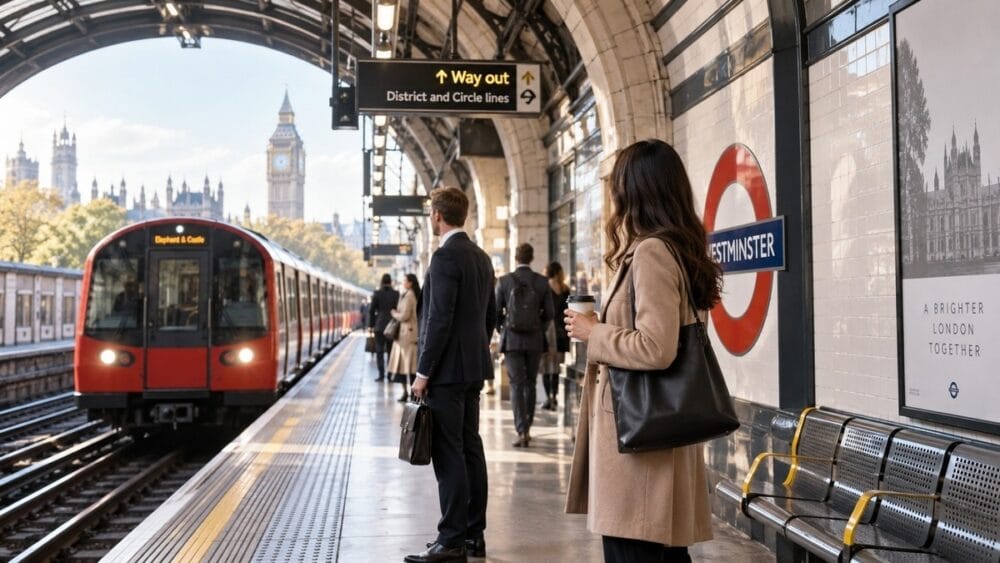
Moving one or two London transport zones further out can give you substantially more space for your money.
But a cheaper flat stops looking like a bargain if the journey to work becomes an hour each way, involves three changes and costs considerably more every month.
That is why we rarely help someone choose a London neighbourhood based on rent alone.
You need to look at rent, transport, commute and lifestyle together.
This guide explains how London’s travel zones work, what you can expect in Zones 1 to 6, what commuting costs in 2026, and how to work out which zone actually makes sense for your move.
The short answer
London’s rail network is divided into nine fare zones, but Zones 1–6 are the ones most people mean when they talk about London zones. Zone 1 is central London and the numbers increase as you move outwards. The zone you live in affects both what you pay to travel and, usually, what you pay in rent — but a well-connected Zone 4 address can beat the wrong part of Zone 2.
If you are new to renting here, you may also want to read our Ultimate Guide to Renting in London 2026.
Insider note from our team
Don’t start with “Which zone should I live in?” Start with where you need to be three or four times a week. A well-connected Zone 4 address can give you a much easier commute than the wrong part of Zone 2.
London zones at a glance
London’s fare zones radiate roughly outwards from the centre. They are not neat circles, and some stations sit on the boundary between two zones.
*Adult pay-as-you-go daily cap for travel including Zone 1. Prices checked September 2026. Actual fares depend on the journey, route and time of travel.
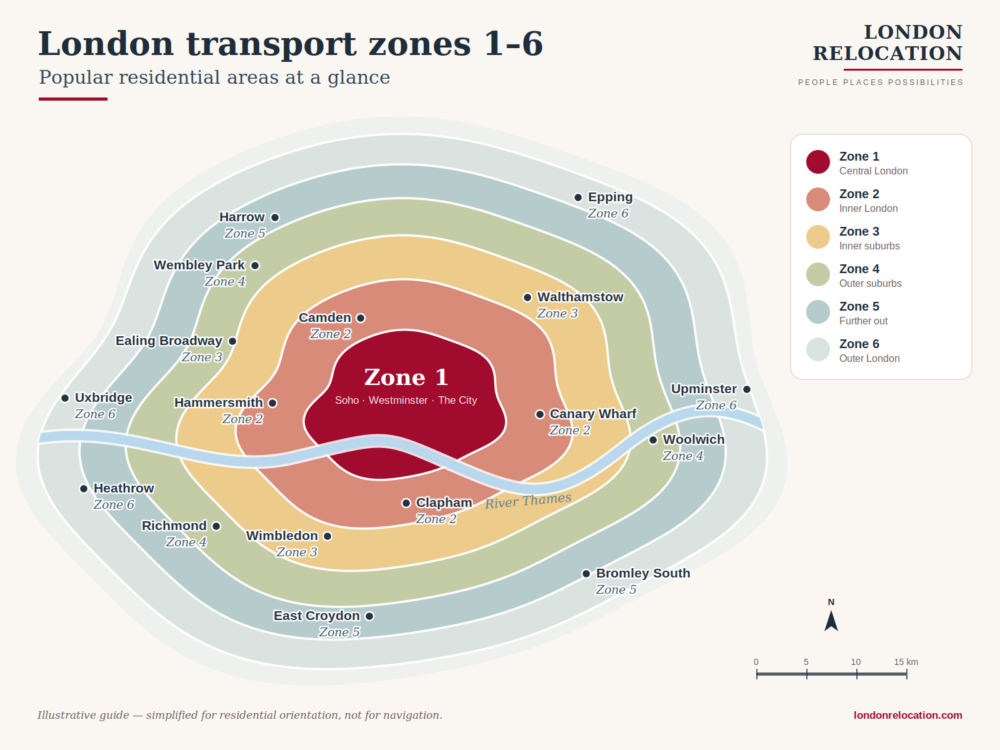
Some of London’s most desirable residential areas sit in Zones 3 and 4, and a direct train can easily beat a theoretically more central address.
What does each London transport zone cover?
Central London
Zone 1: central London
Zone 1 is the heart of London and includes much of the West End, Westminster and the City of London. Think Soho, Covent Garden, Mayfair, Marylebone, parts of South Bank, the City and the areas around Oxford Circus, Bank and Victoria.
This is London at its most concentrated: offices, restaurants, theatres, museums and nightlife on your doorstep, with many journeys made on foot. The trade-off is obvious — space is expensive.
Best for: walkability, long central workdays and city life outside the door.
Think carefully if: space, schools, greenery or value matter more.
Inner London
Zone 2: the classic London compromise
For many newcomers, Zone 2 is the sweet spot. You stay close to central London but start getting neighbourhoods that feel genuinely residential: high streets, larger parks, independent cafés and communities that carry on beyond the working week.
Examples include parts of Clapham, Hammersmith, Camden and Canary Wharf. Demand is high because it offers the commute most renters want without the full Zone 1 premium.
Best for: professionals, couples and international relocators wanting a short commute.
The catch: popular Zone 2 areas can command rents close to Zone 1.
Inner / outer transition
Zone 3: where the value calculation gets interesting
Zone 3 is one of the most useful parts of the London map for renters. You are far enough out that housing becomes more spacious and residential, but close enough in that a good rail or Tube connection still produces a very manageable commute.
Examples include Wimbledon, Ealing Broadway and Walthamstow Central. Ten or fifteen extra minutes on a train can translate into a meaningfully better home.
Best for: better value, hybrid workers, couples needing more space and families.
Watch: the line matters far more than the zone number.
Outer London
Zone 4: more London for your rent
On paper, Zone 4 can look “far out” to someone who has never lived here. In reality it contains established, desirable neighbourhoods such as Richmond, plus major transport centres including Wembley Park and Woolwich.
The housing trade-off becomes more noticeable: more floor space, more houses rather than flats, more gardens and easier access to green space.
Best for: families, hybrid workers and people trading journey time for space.
Biggest mistake: assuming every Zone 4 commute is slow.
Outer London
Zone 5: outer London with real commuter options
By Zone 5 you are firmly into outer London. Areas around East Croydon, Bromley South and Harrow & Wealdstone illustrate why the Tube map alone can be misleading.
National Rail can make long geographic distances surprisingly quick. Housing generally becomes more suburban, with houses, larger flats, residential streets and more green space.
Best for: families, hybrid workers and renters prioritising space.
Watch: station access and the number of changes.
Outer edge
Zone 6: the edge of London, but not disconnected
Zone 6 contains some of the furthest points on the standard London network, including Heathrow, Uxbridge and Upminster, as well as stations such as Epping.
This is where the rent-versus-commute decision becomes most personal. For someone working remotely four days a week, living further out can offer a level of space that is difficult to justify financially in inner London.
Best for: remote and hybrid workers, families and airport-linked jobs.
Think about: your real weekly travel pattern, not just distance from Zone 1.
What does it cost to travel across London zones in 2026?
For most newcomers, contactless or Oyster pay as you go is the simplest way to travel. Daily and weekly caps limit eligible costs once you reach the relevant threshold.
Adult pay-as-you-go caps and Travelcard prices, checked September 2026. Source: Transport for London.
Insider note from our team
We see people spend enormous energy trying to save £50 a month on transport while ignoring a £300–£500 difference in rent. Work out the whole monthly cost first. Then decide what your time is worth.
Which London zone should you live in?
There is no zone that is automatically “best”. The right answer depends on your housing budget, where you travel regularly and the life you want outside work.
- Zone 1 — live central. Prioritise walking, short central commutes and city life.
- Zone 2 — stay close. Central access with a stronger residential feel.
- Zone 3 — balance value. Often the strongest middle ground between space and commute.
- Zone 4 — buy back space. More room, greenery and family-friendly housing.
- Zone 5 — think rail. Fast National Rail can matter far more than the zone number.
- Zone 6 — optimise hybrid life. Strong option when you do not commute into Zone 1 daily.
Choose the train line before you choose the zone.
If your office is at Liverpool Street, a fast Elizabeth line or rail connection east or west may matter more than conventional ideas about “central”. If you work at Canary Wharf, the Jubilee line, Elizabeth line and DLR reshape the sensible search area. For Victoria, Waterloo, London Bridge or King’s Cross, the map changes again.
This is why searching for a “Zone 2 flat” is usually less useful than starting with a maximum door-to-door commute.
See also our guide to the best places to live in London.
Typical commute times to central London
Zone number is a poor predictor of exact commute time, so treat these as planning ranges rather than journey-planner promises.
A Zone 5 station on a fast National Rail route can outperform a Zone 3 address that needs a bus, a Tube and a change. Add the walk to the station, waiting time, the interchange and the final walk to the office: a property advertised as “25 minutes from central London” can easily produce a 50-minute door-to-door commute.
Start with your real week, not a zone number
When we relocate someone to London, the useful questions are rarely “What is the nicest Zone 2 neighbourhood?” These narrow the city far more effectively:
- Where is your office, school or university?
- How many days a week will you actually travel there?
- What is the longest commute you would genuinely tolerate?
- Do you need one bedroom or three?
- Is outdoor space important?
- Do you want nightlife outside your door, or somewhere quiet?
- Would you rather spend another £300 on rent, or add 15 minutes to your journey?
Frequently asked questions about London transport zones (FAQ)
How many zones are there in London?
London’s rail fare system has nine zones, numbered 1 to 9.
Zones 1–6 cover the main Greater London fare area, while Zones 7–9 primarily include stations outside Greater London.
What is Zone 1 in London?
Zone 1 is central London. It covers much of the West End, Westminster and the City of London.
It contains many of London’s major employment, shopping, cultural and tourist destinations.
Is Zone 2 cheaper than Zone 1?
Housing in Zone 2 is often cheaper than comparable housing in Zone 1, but the zone number alone does not determine rent.
Particularly desirable Zone 2 neighbourhoods can be more expensive than less fashionable locations closer to the centre.
What is the cheapest London zone to live in?
Rents tend to fall as you move away from central London, but there is no single cheapest zone.
Compare the specific property, the travel cost and the commute time rather than relying on the zone.
Which London zone offers the best value for commuters?
There is no single best-value zone for every commuter. Zones 3–5 can combine lower housing costs with fast central connections on certain routes.
Compare rent savings against the additional fares and the door-to-door journey time.
Is Heathrow in Zone 6?
Yes. Heathrow’s Underground stations are in London fare Zone 6.
Some Elizabeth line journeys involving Heathrow have different fares, so check the exact station-to-station journey before budgeting.
Do London buses have zones?
Not in the same way as Tube and rail journeys.
London buses use a flat-fare system rather than charging according to numbered rail zones.
Do I need a Travelcard?
Not necessarily. Contactless or Oyster pay as you go works across TfL services and automatically applies eligible daily caps.
Weekly capping can also apply to qualifying pay-as-you-go travel.
Finding the right London zone for your move
The London zones map is useful for understanding fares. It is not a housing strategy.
Someone working three days a week in Canary Wharf, a family with children at school in west London, and a couple commuting to King’s Cross need completely different versions of the city.
Rent usually buys you more space further out. Transport costs rise. Commutes generally get longer. But London’s fast rail corridors mean none of those relationships is perfectly linear.
The right move is the one where the home, the commute and the monthly cost work together.
Your London home search
Tell us where you need to be, how you want to live and what you want to spend. Our Accompanied Home Search builds the commute, budget and lifestyle into the shortlist from day one.
Sources
This guide draws on official transport and housing data. Fares change — check current prices before budgeting.