London Grocery Stores: A 2026 Shopper’s Guide


Last updated: May 2026 | Written by Corrina Pinsent — London Relocation expert with first-hand knowledge of London’s grocery scene.
Whether you’re a newcomer unpacking boxes in your first London flat or a long-time resident hunting for the best deals, understanding London’s grocery landscape can save you hundreds of pounds a year — and make your weekly shop genuinely enjoyable.

What is the cheapest way to do grocery shopping in London?
The cheapest way to do grocery shopping in London is to shop at Aldi or Lidl for your main weekly shop, then use Tesco or Sainsbury’s with their loyalty cards for the items they don’t stock. This combination typically reduces a London grocery bill by 20–40% compared to shopping exclusively at mainstream supermarkets.
Most Londoners don’t actually rely on a single supermarket. The cheapest weekly shop almost always comes from combining a budget chain (for staples, fresh produce, dairy and store-cupboard basics) with a mid-range chain whose loyalty pricing unlocks discounts on the brands and specialist items the budget stores don’t carry.
This guide walks you through every option — from the cheapest weekly shop to the best organic stores, from grocery delivery services to international food markets where you can find a taste of home.
Grocery Shopping in London: Quick Overview
London’s supermarket scene has shifted considerably in recent years. Budget chains Aldi and Lidl are no longer just for students and bargain hunters — they’re now firmly mainstream, frequented by professionals, families and everyone in between. Meanwhile, loyalty-based “member pricing” at Tesco and Sainsbury’s has fundamentally changed how regular shoppers save money.
The rapid delivery apps that boomed during the pandemic (Getir, Gorillas) have since exited the UK entirely, while Amazon Fresh closed all 19 of its cashier-free stores in early 2026. Online grocery delivery, however, continues to grow through more established players like Ocado, Tesco, and Sainsbury’s.
Key facts about grocery shopping in London
- Cheapest supermarkets: Aldi and Lidl
- Most popular supermarkets in London: Tesco and Sainsbury’s
- Premium options: Waitrose and M&S Food
- Typical weekly grocery cost: £25–£60 per person
- Loyalty cards can reduce prices by up to 30% on hundreds of products at Tesco and Sainsbury’s
Budget Supermarkets: Aldi and Lidl
If you had told a London professional ten years ago that they’d be doing their weekly shop at Aldi, they might have laughed. In 2026, nobody’s laughing — they’re too busy saving money on surprisingly good wine and organic sourdough.
 Aldi and Lidl have undergone a remarkable transformation in how Londoners perceive them. Once seen as strictly budget options, both chains are now mainstream supermarkets that attract shoppers from every demographic. The secret to their low prices is simple: smaller stores, fewer product lines (around 1,500–2,000 compared to 30,000+ at a Tesco), and a no-frills approach to store design.
What Makes Them Special in London
- Aldi’s middle aisle (known affectionately as the “aisle of wonder”) sells everything from power tools to ski gear alongside the groceries. It’s become a cultural phenomenon.
- Lidl’s in-store bakery produces fresh croissants, bread and pastries daily — often better than dedicated bakeries and at a fraction of the price.
- Both stock a solid range of organic and free-range products that rival more expensive chains.
- London has roughly 50+ stores for each chain, though they tend to be in outer boroughs. Central London locations are still limited, so check the store locator before you visit.
Tip for newcomers: Don’t expect bagging areas. Aldi and Lidl cashiers scan items at lightning speed — just throw everything back in your trolley and bag up at the shelf by the window. It’s part of how they keep prices low.
London Supermarkets at a Glance
Here’s a quick comparison of the main grocery stores you’ll encounter in London:
How Much Do Groceries Cost in London?
A typical Londoner spends £25–£60 per person per week on groceries, depending on supermarket choice. Budget shoppers using Aldi or Lidl can keep weekly costs at £25–£35; mid-range supermarkets average £40–£60; premium shops like Waitrose run £60–£100+ per week.
Groceries are one of the more flexible parts of the cost of living in London, and the biggest variable in your monthly budget usually isn’t what you eat — it’s where you buy it.
Average weekly grocery costs in London (per person)
- Budget supermarkets (Aldi, Lidl): £25–£35 per week
- Mid-range supermarkets (Tesco, Sainsbury’s, Asda, Morrisons): £40–£60 per week
- Premium supermarkets (Waitrose, M&S Food, Whole Foods): £60–£100+ per week
Typical monthly grocery budgets
- Single person: £120–£250 per month
- Couple: £250–£450 per month
- Family of four: £400–£700+ per month
The biggest difference in cost almost always comes from supermarket choice rather than food type. The same basket of staples — bread, milk, eggs, chicken, vegetables, pasta, rice — can cost roughly £18 at Aldi, £28 at Tesco without a Clubcard, £24 at Tesco with a Clubcard, and £35+ at Waitrose. That’s why the supermarket combination strategy in this guide matters so much.
How Expats Actually Shop in London — Local Insights
After helping hundreds of expats and international professionals settle into London, one pattern shows up consistently in their first few weeks: they overspend on groceries.
The reason is almost always the same. Newcomers default to whichever convenience store is closest to their flat — typically a Tesco Express, Sainsbury’s Local or Co-op — because that’s how grocery shopping works in many other cities. In London, those convenience formats are 10–20% more expensive than the same chain’s full-size supermarkets, and they don’t carry the cheaper own-brand ranges.
A few patterns we see once people have been in London for a month or two:
- The “anchor and top-up” strategy. Most expats settle into one larger weekly shop (Aldi, Lidl, a full-size Tesco or an Ocado delivery) and then use convenience stores only for fresh items between shops.
- Loyalty cards on day one. The clients who save most don’t wait — they download the Tesco and Sainsbury’s apps before their first proper shop. This single habit is usually worth £30–£60 a month.
- Aldi or Lidl for staples, mid-range for specialities. Few people shop exclusively at one chain. Aldi and Lidl handle the basics; Sainsbury’s, Tesco or M&S fill in the brands and specialist items.
- Less stockpiling than they’re used to. American clients in particular comment on how their kitchens force them to shop more frequently and buy less each time. London fridges are smaller, freezers smaller still.
Once people work out the local rhythm, weekly grocery costs usually drop sharply and stay stable. The newcomer overspend almost always corrects itself within the first month — but it can be avoided entirely by going in with the right plan.
The Big Four: Tesco, Sainsbury’s, Asda and Morrisons
These four chains dominate UK grocery. Between them, they account for around two-thirds of the grocery market. In London, Tesco and Sainsbury’s are by far the most visible, with hundreds of stores ranging from small Express and Local formats (perfect for a quick top-up) to massive superstores on the outskirts.

Tesco: best all-round supermarket
Tesco is the most widely used supermarket in London, with 350+ stores across the capital. It strikes the strongest balance of price, range and convenience, and its Clubcard prices make it competitive on weekly shop totals despite its mid-market positioning.
Sainsbury’s: quality and convenience
 Sainsbury’s offers slightly higher quality on fresh ranges than Tesco at a similar price point, with one of the strongest loyalty programmes (Nectar) and excellent online ordering.
Asda: best for bulk shopping
Asda has fewer London locations (around 30, mostly in outer boroughs) but offers the most cost-effective option for larger weekly shops and bulk buying — particularly useful for families.
Morrisons: fresh food focus
Morrisons stands out for its fresh food counters — butchers, fishmongers and delicatessens — which give it a more market-style feel than its competitors. Morrisons also offers delivery through Amazon.
Store Formats: Know the Difference
Tesco Express / Sainsbury’s Local: Small convenience stores on high streets and near tube stations. Higher prices than the full-size stores, but convenient for essentials.
- Tesco Metro / Sainsbury’s (standard): Medium-sized urban stores with a decent range.
- Tesco Superstore / Sainsbury’s Superstore: Large out-of-town stores with the full product range and the best prices. Worth the trip for a big weekly shop.
Why Loyalty Cards Matter More Than You Think
Tesco Clubcard and Sainsbury’s Nectar cards are free and unlock significantly lower “member prices” on hundreds of products — typically 20–30% off. They are the single fastest way to reduce a London grocery bill. Download the apps on your first day in the city.
The single biggest change in UK grocery shopping in recent years is member pricing. If you take away one thing from this guide, let it be this: download the Tesco and Sainsbury’s apps on your very first day in London.
Here’s how it works. Many items in Tesco and Sainsbury’s now display two prices on the shelf — a regular price and a lower “Clubcard Price” (Tesco) or “Nectar Price” (Sainsbury’s). The difference is often substantial — typically 20–30% less on hundreds of products. You simply need the free loyalty card (physical or via the app) to access the lower price. There’s no catch and no subscription fee.
Tesco Clubcard also accumulates points that convert to vouchers, which can be tripled in value when used with Tesco’s restaurant and entertainment partners. Sainsbury’s Nectar works similarly, with points redeemable across Sainsbury’s, Argos and other partners. Both schemes also apply online, so you get the same discounts on home delivery orders.
For anyone new to food shopping in London, especially expats, this is the quickest and most reliable way to cut weekly costs.
Premium Supermarkets: Waitrose and M&S Food
For those willing to pay a bit more for quality, Waitrose and Marks & Spencer Food are London’s premium grocery options.
Waitrose
 Waitrose occupies a unique place in London grocery. With 62 stores across the capital and a major £1 billion investment programme currently refreshing locations across London — including recently renovated stores in Marylebone and Clerkenwell — Waitrose is actively expanding its London presence.
What sets Waitrose apart is a genuine commitment to quality and provenance. Their own-brand ranges (Essential Waitrose for value, No.1 for premium, and Duchy Organic for organic products) are consistently rated among the best in UK grocery. The myWaitrose loyalty card offers free coffee with any purchase and access to personalised discounts.
Waitrose has also been at the forefront of sustainability in grocery. Several London stores now feature refill options for dry goods and household products, following the success of their “Waitrose Unpacked” programme.
M&S Food

Marks & Spencer’s food halls are legendary among Londoners. The M&S Simply Food convenience format appears across London, often in railway stations and busy high streets. M&S is particularly strong on ready meals (widely regarded as the best supermarket ready meals in the UK), seasonal products, and treats. M&S products are now available online via Ocado, which replaced its former partnership with Waitrose. The M&S Sparks loyalty card offers personalised offers and rewards.
Organic and Health-Conscious Shopping
Planet Organic

Planet Organic remains London’s leading dedicated organic supermarket, with eight stores across the city. Founded in 1995, it operates as a fully certified organic supermarket offering over 8,000 product lines — from fresh produce and pantry staples to natural beauty products and supplements.
Key locations include Westbourne Grove (Notting Hill), Torrington Place (near UCL), Muswell Hill, Islington and Devonshire Square (City of London). Prices are higher than mainstream supermarkets, but the range and quality of organic and specialist products is unmatched. Planet Organic also features in-store cafés and prepared food counters.
Whole Foods Market
 Whole Foods, now owned by Amazon, is expanding in the UK. The flagship Kensington High Street store is enormous by London standards and feels like stepping into a premium American grocery store — which makes it particularly popular with expats. Following the closure of all Amazon Fresh stores in early 2026, Amazon is converting several former Fresh locations into new Whole Foods outlets, with plans to have 12 Whole Foods stores in the UK by the end of 2026. For American expats, Whole Foods stocks many familiar US brands that are difficult to find elsewhere in London.
Daylesford Organic

Located in Notting Hill, Daylesford Organic is a luxury option offering premium organic produce, meats, dairy and artisanal goods. It also features a beautiful café. Think of it as the high-end farmers’ market experience, permanently indoors. Prices reflect the premium quality.
Grocery Delivery and Online Shopping
London’s grocery delivery landscape has undergone dramatic changes since 2024. The ultra-fast delivery apps that boomed during the pandemic — Getir and Gorillas — both exited the UK entirely in mid-2024, unable to make the rapid-delivery model profitable. Amazon then closed all 19 of its Amazon Fresh stores in early 2026, ending its experiment with cashier-free physical grocery stores in the UK.
The good news? Reliable grocery delivery is stronger than ever through established players:
Ocado: best overall delivery

Ocado is the UK’s leading online-only supermarket. It has no physical stores — everything is ordered online and delivered to your door in a chosen one-hour slot. Ocado stocks an enormous range (over 50,000 products), including M&S food products. Quality is consistently high, and the website/app is excellent.
The Ocado Smart Pass (£7.99–£12.99/month) gives free delivery on orders over a certain threshold, making it worthwhile for regular online shoppers. Ocado runs two major fulfilment centres in London (Coulsdon and Greenford), enabling reliable same-day and next-day delivery.
Tesco and Sainsbury’s home delivery
Both offer home delivery and click-and-collect options. Delivery slots typically range from £2–£7 depending on the time chosen. The advantage of ordering from Tesco or Sainsbury’s online is that Clubcard and Nectar member pricing applies to online orders too, so you get the same discounts as in-store.
Amazon grocery
 With the closure of Amazon Fresh stores, Amazon has pivoted to online-only grocery delivery in the UK. Amazon now offers same-day delivery of perishable groceries (fresh produce, meat, dairy, frozen food) through Amazon.co.uk for Prime members. Additionally, Amazon partners with Morrisons, Iceland, Co-op and other retailers for grocery delivery through its platform.
Rapid delivery: what’s left?
The era of 10-minute grocery delivery in London is essentially over. What remains are Deliveroo, Uber Eats and Just Eat grocery partnerships — these apps partner with local convenience stores and some supermarkets to deliver a limited grocery range, typically within 20–40 minutes. They’re useful for emergency items but not a substitute for a proper weekly shop.
International and Specialty Stores
One of London’s greatest strengths is its multicultural food scene. Whatever cuisine you’re used to cooking at home, you can find the ingredients somewhere in London.

Asian Supermarkets
- SeeWoo (Chinatown/Greenwich) — One of the largest Chinese/pan-Asian supermarkets in London. Excellent for sauces, noodles, fresh produce and frozen dumplings.
- Loon Fung (Chinatown/Silvertown) — Another major Chinese supermarket with a wide selection of ingredients.
- H Mart — Korean supermarket popular for kimchi, Korean snacks, and ready-made Korean dishes.
- Japan Centre (Piccadilly Circus area) — The go-to for Japanese ingredients, bento boxes and sake.
- Middle Eastern and Turkish
North London’s Green Lanes (between Harringay and Turnpike Lane) is lined with Turkish supermarkets offering incredible value on fresh produce, bread, cheese, olives and spices. Stores like TFC and various independent grocers here are significantly cheaper than mainstream supermarkets for Mediterranean staples.
For American Expats
Finding your favourite American brands in London used to be a real challenge. It’s gotten easier:
- Whole Foods Market stocks many familiar US brands — peanut butter varieties, cereals, snack brands that other UK supermarkets don’t carry.
- Partridges in Chelsea carries a selection of American products alongside its premium British range.
- Major supermarkets now have “world food” aisles with some American staples, though the selection varies.
Markets
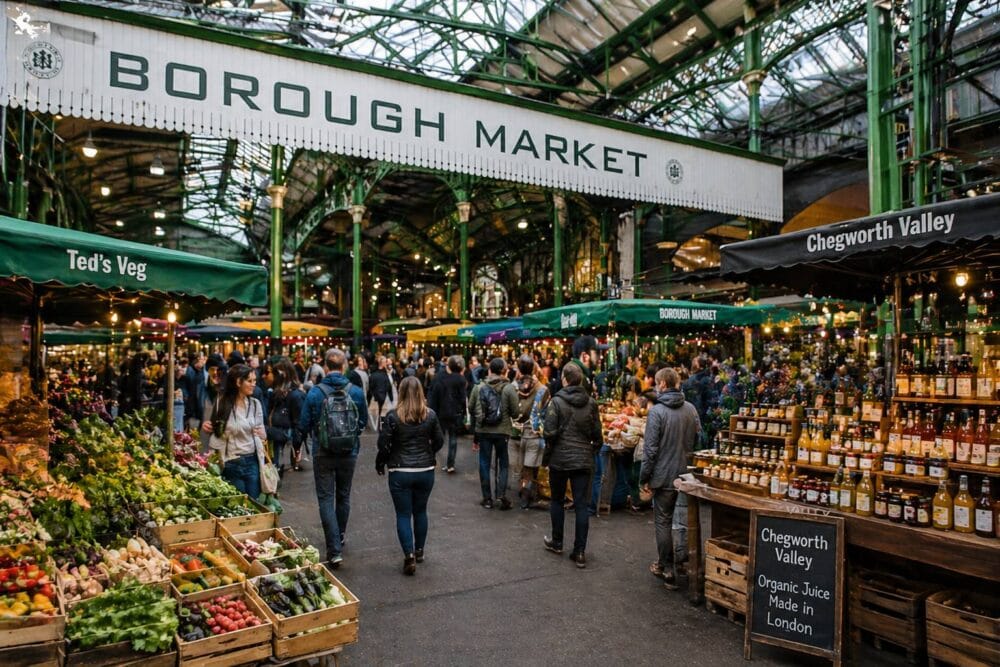
London’s markets deserve a special mention. Borough Market (London Bridge) is the city’s most famous food market — it’s touristy but the quality is genuinely excellent. Eataly at Broadgate Circle offers an Italian food hall experience with fresh pasta, cheeses, and charcuterie. Broadway Market (Hackney) on Saturdays is a local favourite for artisan food stalls.
Where to Shop for Groceries by London Area
Where you live in London affects how you shop. Each part of the city has its own grocery character — and knowing what to expect helps you set up your weekly shopping routine quickly after a move.
Central London (Zones 1–2)
Central areas are dominated by convenience formats — Tesco Express, Sainsbury’s Local, M&S Simply Food and Co-op — which are convenient but typically 10–20% more expensive than full-size supermarkets. The standout exception is Whole Foods Kensington High Street, which is a genuine destination shop. For premium options, Waitrose stores in Marylebone and Clerkenwell have recently been refurbished and offer a full-range experience in central locations.
North London
North London is the city’s strongest area for international groceries, particularly Turkish and Middle Eastern. Green Lanes (Harringay/Turnpike Lane) is the standout — multiple Turkish supermarkets including TFC offer some of the best fresh produce prices in London. Planet Organic Muswell Hill serves the more health-conscious end. Tesco and Sainsbury’s superstores in areas like Brent Cross and Wood Green offer cheaper full weekly shops.
East London
East London’s grocery scene is the most diverse and rapidly changing. The Asian supermarket scene here is excellent — particularly around Silvertown (Loon Fung), Whitechapel and Walthamstow. Broadway Market in Hackney on Saturdays is a local favourite for artisanal food. Eataly at Broadgate Circle (City fringe) is the go-to for Italian. Aldi and Lidl have a strong presence in East London boroughs.
West London
West London has the highest concentration of premium grocery options in the city. Whole Foods Kensington, Daylesford Organic in Notting Hill, Planet Organic Westbourne Grove, and multiple Waitrose locations create the most affluent grocery profile in London. For mid-range and budget shoppers, larger Tesco, Sainsbury’s and Asda stores cluster around West Ealing and Park Royal.
South London
South London offers a strong all-round mix and often the best value in the city. Aldi and Lidl have strong presence across boroughs like Lewisham, Croydon, Tooting and Brixton. Brixton Market remains one of the best places in London for Caribbean and African ingredients, while Tooting and Streatham offer excellent South Asian groceries. Larger Tesco and Sainsbury’s superstores are easier to find than in central areas.
Sustainable Shopping: Refill Stations and Zero Waste
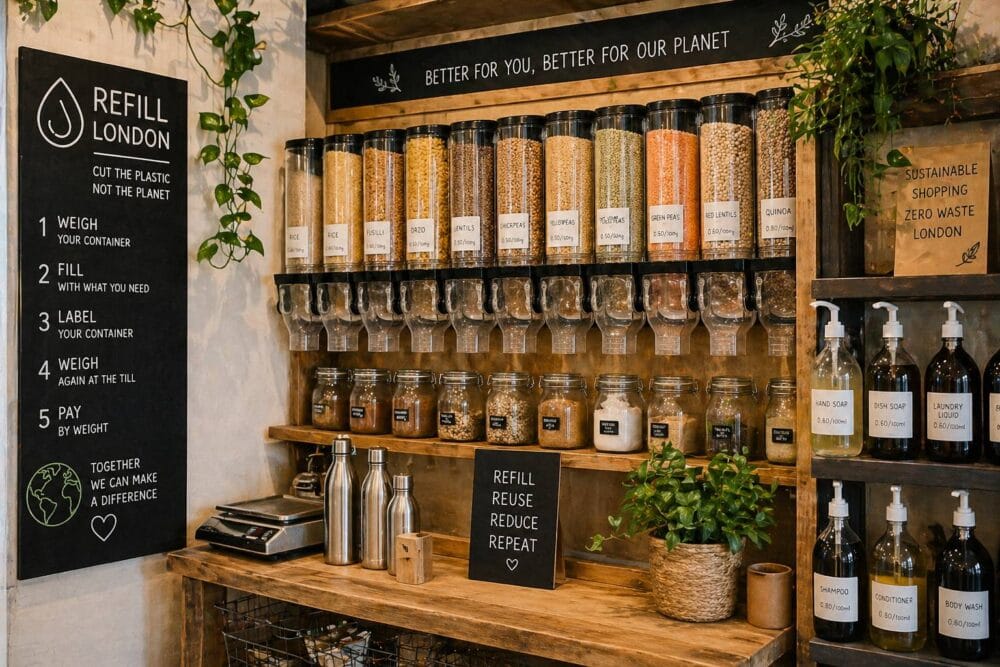
London’s grocery scene is increasingly embracing sustainability. Several supermarkets and independent stores now offer ways to reduce packaging waste:
- Waitrose has been a pioneer with its “Unpacked” programme, offering refill dispensers for dry goods (pasta, rice, cereals, lentils) and cleaning products. Several London stores feature these refill zones.
- M&S and Morrisons have joined the Refill Coalition, a cross-retailer initiative to standardise refill stations across UK supermarkets.
- Independent refill shops have established themselves in areas like Hackney and Marylebone, offering a full zero-waste shopping experience where you bring your own containers for everything from olive oil to shampoo.
Practically, most London supermarkets no longer provide free plastic bags. Bring your own reusable bags — or pay 10p–25p for a bag for life at the checkout.
Tips for Expats and Newcomers
Grocery shopping in London has a few quirks that catch newcomers off guard. Here’s what the guidebooks don’t tell you:
“Best Before” vs “Use By”
These two date labels mean very different things in the UK. “Use by” is a safety date — don’t eat the product after this date. “Best before” is a quality date — the food is still safe to eat after this date, it just may not be at its peak. Many products (tinned food, dried pasta, cereal) are perfectly fine long past their “best before” date.
The Meal Deal
One of the great institutions of British life: the supermarket meal deal. At Tesco, Sainsbury’s and Boots, you can pick up a sandwich (or wrap or salad), a drink and a snack for a fixed price — typically £3.50–£4.50. It’s an absurdly good deal for lunch and something most Londoners rely on at least once a week. Use your loyalty card for the best price.
Yellow Sticker Reductions
In the final hour or two before closing (and sometimes in the morning for products expiring that day), supermarkets reduce items with bright yellow stickers — sometimes by 50–90%. Regulars know the timing at their local store and plan accordingly. It’s an excellent way to save money on quality food that’s perfectly good to eat that day.
Too Good To Go
 This free app connects you with bakeries, restaurants, cafés and supermarkets that have surplus food at the end of the day. You pay a reduced price (typically £3–£5) for a “surprise bag” of food that would otherwise go to waste. It’s hugely popular in London and a great way to discover new food while saving money.
How London Differs from US Grocery Shopping
If you’re arriving from the United States, here are the biggest differences:
- Stores are smaller. Even a “large” London supermarket is tiny by American standards. Don’t expect the vast aisles and enormous variety of a typical US grocery store.
- Less bulk buying. London flats are small, and so are London fridges. Most people shop more frequently and buy less each time.
- Different brands. You won’t find many American brands outside of Whole Foods. But the UK equivalents are often excellent — give them a chance.
- Self-checkout is the norm. Most supermarkets have extensive self-checkout areas, and many Londoners use them exclusively.
Frequently Asked Questions About Grocery Stores in London
What is the cheapest supermarket in London?
What are the "Big Four" supermarkets in the UK?
Do I need loyalty cards for UK supermarkets?
Is grocery shopping expensive in London?
Where can I find American food products in London?
Can I get groceries delivered in London?
What happened to the 10-minute grocery delivery apps in London?
Need Help Settling In?
Navigating a new city’s grocery options is just one small part of relocating to London. At London Relocation, we’ve helped hundreds of professionals, families and individuals from around the world find their footing in the city — from securing the perfect flat to setting up your bills and understanding the local way of life.